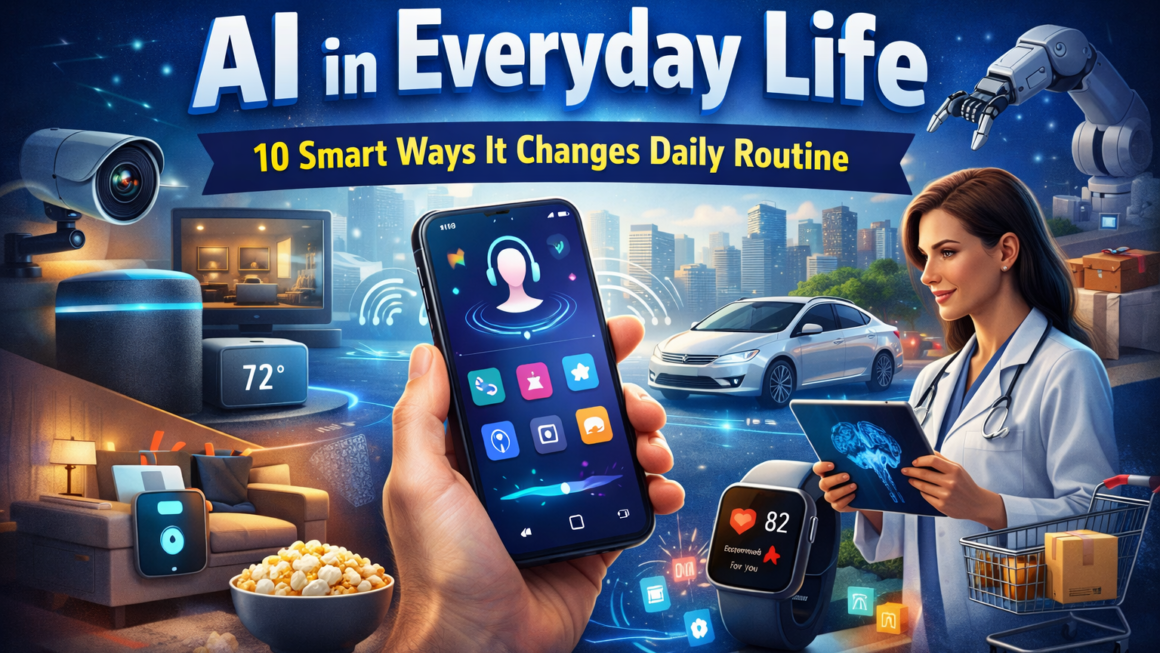






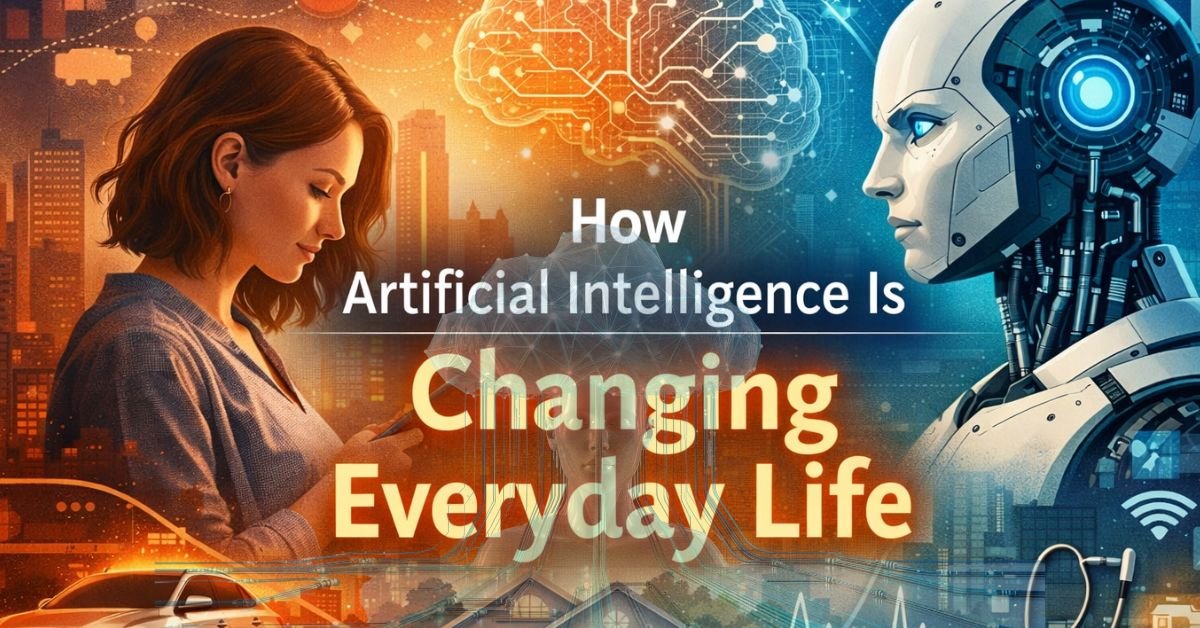
Artificial Intelligence (AI) is no longer something that exists only in tech labs or science fiction movies. It quietly shapes how we live, work, communicate, learn, and even make decisions every single day. From the moment we unlock our phones to the time we go to sleep, AI works behind the scenes — often unnoticed, yet deeply influential.
Unlike earlier technologies that demanded active learning, AI adapts to us. It learns our habits, preferences, routines, and patterns, gradually becoming part of everyday life. This invisible integration is what makes AI both powerful and, at times, misunderstood.
In this article, we’ll explore how AI is transforming real life, not just through tools and software, but through behavior, productivity, creativity, ethics, and the future of human work.
Understanding AI in Simple Terms
Artificial Intelligence refers to computer systems designed to perform tasks that usually require human intelligence. These include learning, reasoning, problem-solving, understanding language, recognizing images, and making predictions.
Unlike traditional software that follows strict rules, AI systems:
- Learn from data
- Improve over time
- Adapt to new inputs
- Make decisions based on patterns
This ability to learn is what separates AI from older technologies.
How AI Has Quietly Entered Daily Life
Many people believe AI is something “extra” — but in reality, most of us already depend on it.
1. Smartphones and Personal Assistants
Voice assistants, camera enhancements, typing suggestions, and facial recognition all rely on AI. Even something as simple as auto-brightness or spam call detection uses machine learning.
2. Social Media and Content Feeds
The posts you see, the videos suggested, and even the ads displayed are driven by AI algorithms analyzing your interests and engagement patterns.
3. Online Shopping
Product recommendations, dynamic pricing, customer reviews analysis, and fraud detection are all powered by AI.
AI isn’t coming — it’s already here.
AI and Human Productivity: A New Working Style
One of the biggest benefits of AI is how it enhances productivity rather than replacing human effort entirely.
AI as a Digital Assistant
Instead of doing work for you, AI increasingly works with you:
- Drafting content
- Summarizing information
- Organizing data
- Scheduling tasks
- Analyzing trends
This allows people to focus on thinking, creativity, and decision-making — areas where humans still excel.
Remote Work and Automation
AI helps manage remote teams, track performance, automate repetitive tasks, and predict workflow issues before they happen. This has reshaped modern workplaces, especially after the global shift to digital work environments.
Creativity and AI: Friend or Threat?
One common fear is that AI will replace creativity. But in reality, creativity is evolving — not disappearing.
How AI Supports Creative Work
AI helps creators:
- Generate ideas
- Explore new styles
- Speed up repetitive tasks
- Experiment without fear of failure
Writers, designers, musicians, and video creators increasingly use AI as a creative partner rather than a replacement.
Human Emotion Still Matters
AI can generate content, but it cannot truly feel emotions, experiences, or cultural depth. The most powerful creative work still comes from human stories, struggles, and perspectives.
AI may assist the brush — but humans still paint the picture.
Education in the Age of AI
Education is undergoing a major transformation due to AI-powered learning systems.
Personalized Learning
AI can:
- Adapt lessons to individual learning styles
- Identify weak areas
- Offer customized practice
- Provide instant feedback
This makes learning more inclusive and efficient, especially for students who struggle in traditional classrooms.
Challenges in Education
While AI improves access, it also raises concerns:
- Over-dependence on automation
- Reduced critical thinking if misused
- Unequal access in developing regions
The key is balance — using AI as a support, not a shortcut.
AI in Healthcare: Saving Time and Lives
Healthcare is one of the most impactful areas of AI development.
Medical Assistance
AI helps doctors:
- Analyze scans and test results
- Detect diseases early
- Predict patient risks
- Improve diagnosis accuracy
These systems don’t replace doctors — they empower them with better data and faster insights.
Mental Health Support
AI-powered chat systems and wellness apps provide basic mental health support, reminders, and coping strategies — especially helpful where professional access is limited.
Ethical Concerns Around Artificial Intelligence
As AI becomes more powerful, ethical questions become unavoidable.
1. Data Privacy
AI systems rely heavily on data. Without proper safeguards, personal information can be misused or exposed.
2. Bias and Fairness
AI learns from existing data. If the data contains bias, AI may unintentionally reinforce discrimination in hiring, lending, or law enforcement.
3. Job Displacement
Some jobs will change or disappear, especially repetitive roles. However, history shows that technology also creates new opportunities — often in unexpected ways.
Responsible AI development is not optional — it’s essential.
AI and the Future of Work
The future of work is not about humans vs machines — it’s about humans with machines.
New Skill Demands
Future professionals will need:
- Critical thinking
- Creativity
- Emotional intelligence
- AI literacy
People who understand how to work alongside AI will have a clear advantage.
AI as a Career Opportunity
AI itself creates careers:
- AI trainers
- Prompt engineers
- Data analysts
- AI ethicists
- Automation consultants
Learning AI basics is becoming as important as learning computer skills once was.
How Businesses Are Using AI Strategically
Modern businesses use AI not just to reduce costs, but to improve decision-making.
Customer Experience
AI chat systems, recommendation engines, and behavior analysis help brands understand customers better and offer personalized experiences.
Business Intelligence
AI processes massive data volumes to detect patterns humans might miss — helping companies plan smarter strategies.
The Human Role in an AI-Driven World
Despite rapid advancement, AI still lacks:
- Emotional understanding
- Moral judgment
- Cultural awareness
- Consciousness
Humans remain essential for:
- Leadership
- Ethics
- Creativity
- Empathy
- Responsibility
AI is a tool — powerful, yes — but still guided by human intent.
Preparing for an AI-Powered Future
Instead of fearing AI, preparation is the smartest response.
Practical Steps
- Learn basic AI concepts
- Use AI tools responsibly
- Stay updated with trends
- Focus on human skills
- Adapt instead of resist
Those who adapt early shape the future — those who don’t struggle to catch up.
Conclusion:
Artificial Intelligence is one of the most transformative forces of our time. It enhances efficiency, expands creativity, improves healthcare, and reshapes education — yet it still depends on human values, ethics, and direction. For more updates visit kainattrendscapes.com
The future isn’t about choosing between humans or AI.
It’s about how humans choose to use AI.
Handled wisely, AI becomes not a threat — but one of humanity’s greatest tools.
How is artificial intelligence actually used in daily life today?
Artificial intelligence is used daily in ways most people don’t notice, such as smartphone face recognition, personalized social media feeds, email spam filtering, navigation apps, online shopping recommendations, and voice assistants. These systems analyze user behavior in real time to improve convenience and accuracy without requiring technical knowledge from users.
Is artificial intelligence safe for long-term human use?
Artificial intelligence is generally safe when developed and used responsibly. The biggest risks come from poor data privacy practices, biased training data, and lack of regulation. When AI systems are transparent, ethically designed, and human-supervised, they enhance productivity rather than cause harm.
Does AI-generated content harm SEO rankings?
AI-generated content does not harm SEO if it is original, helpful, well-structured, and edited for human readers. Search engines prioritize value and relevance, not how content is created. Poorly edited or repetitive AI content, however, may struggle to rank.
What skills should people learn to stay relevant in an AI-driven world?
To stay relevant, people should focus on critical thinking, problem-solving, creativity, communication, emotional intelligence, and basic AI literacy. Understanding how to work alongside AI tools is becoming more important than technical coding skills alone.
How does artificial intelligence affect jobs and employment?
AI changes the nature of work by automating repetitive tasks while creating new roles in data analysis, AI management, content strategy, and digital innovation. Jobs that require creativity, human interaction, and decision-making are least likely to be replaced.
Is artificial intelligence expensive to use for individuals or small businesses?
Many AI tools are affordable or even free for individuals and small businesses. Cloud-based platforms allow users to access advanced AI features without expensive hardware, making AI adoption more accessible than ever.