






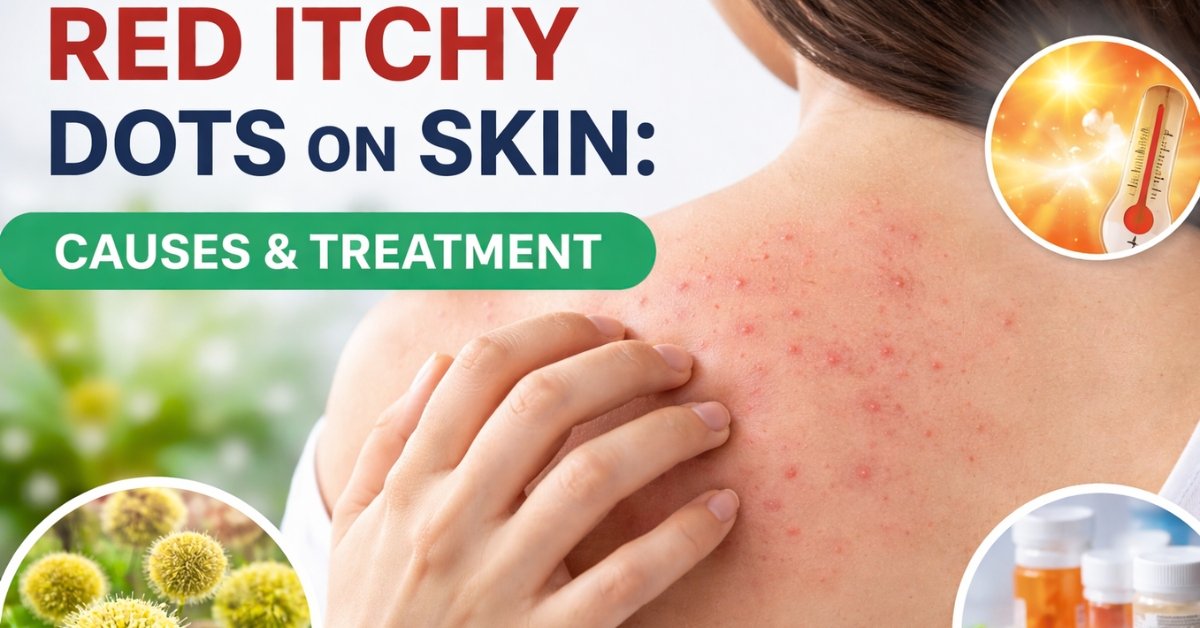
Many people are noticing red itchy dots on skin more frequently nowadays. These small red spots can appear suddenly and cause discomfort, irritation, and concern. Sometimes they disappear quickly, while other times they last for days or weeks.
This condition affects people of all ages and can appear anywhere on the body, including the arms, legs, chest, back, and neck. While it may look alarming, in most cases, it is not dangerous and can be treated easily once the cause is identified.
Understanding why these red itchy dots appear is the first step toward effective treatment and prevention. This complete guide explains everything in simple language, including causes, symptoms, treatments, home remedies, and prevention strategies.
What Are Red Itchy Dots on Skin?
Red itchy dots are small visible skin changes caused by irritation, inflammation, allergy, infection, or blocked sweat glands. These dots may be:
- Small or large
- Flat or raised
- Mildly itchy or severely itchy
- Temporary or long-lasting
They may appear suddenly or develop gradually over time.
The itching occurs because the skin releases chemicals like histamine in response to irritation or allergens.
Common Causes of Red Itchy Dots on Skin
There is no single cause. Several factors can trigger this condition.
1. Skin Allergies
Allergic reactions are one of the most common causes. The immune system reacts to harmless substances as if they are harmful.
Common allergy triggers include:
- Dust
- Pollen
- Certain foods
- Medicines
- Cosmetics
- Detergents
- Perfumes
When the body reacts, red itchy dots appear on the skin.
You can learn more about how allergies affect the body from this detailed resource by the American Academy of Dermatology, which explains that skin allergies often cause redness, itching, and inflammation.
2. Heat Rash (Very Common)
Heat rash occurs when sweat gets trapped in blocked sweat glands.
This happens more often in:
- Hot weather
- Humid environments
- Excessive sweating
Symptoms include:
- Small red dots
- Itching or prickling sensation
- Burning feeling
Heat rash usually appears on:
- Neck
- Chest
- Back
- Underarms
3. Dust and Environmental Pollution
Pollution and dust particles irritate sensitive skin and cause allergic reactions.
This is especially common in urban areas where air quality is poor.
Pollution weakens the skin barrier, making it easier for allergens to trigger reactions.
4. Contact Dermatitis
This happens when the skin touches something irritating.
Common triggers include:
- New soap
- Shampoo
- Detergent
- Fabric materials
- Jewelry
- Skincare products
The reaction may appear within minutes or hours.
5. Insect Bites
Mosquitoes, mites, fleas, and other insects can cause red itchy dots.
Symptoms include:
- Small red bumps
- Severe itching
- Swelling
These usually heal within a few days.
6. Sweat and Poor Hygiene
Sweat accumulation creates a favorable environment for irritation and bacterial growth.
This increases the risk of:
- Skin irritation
- Heat rash
- Infection
Keeping the skin clean helps prevent this.
7. Stress and Immune Response
Stress affects the immune system and can trigger skin reactions.
When stressed, the body releases chemicals that increase inflammation and itching.
Symptoms Associated with Red Itchy Dots on Skin
Common symptoms include:
- Small red spots
- Itching
- Burning sensation
- Skin irritation
- Dry skin
- Mild swelling
Severe symptoms may include:
- Intense itching
- Spreading rash
- Pain
- Infection
Who Is at Higher Risk?
Anyone can develop this condition, but some people are more vulnerable.
Higher risk groups include:
- People with sensitive skin
- Children
- Elderly individuals
- People with allergies
- People living in hot climates
- Individuals exposed to pollution
How Long Do Red Itchy Dots Last?
Duration depends on the cause.
Typical timeline:
- Heat rash: 2–5 days
- Allergic reaction: Few hours to 1 week
- Contact irritation: 2–10 days
- Insect bites: 3–7 days
If symptoms last longer than 2 weeks, medical evaluation is recommended.
Effective Treatment Options
Treatment depends on the cause.
1. Antihistamines
These medicines reduce allergic reactions and itching.
They work by blocking histamine.
2. Anti-itch Creams
Creams help calm inflammation and reduce irritation.
3. Cooling Lotions
Cooling lotions soothe irritated skin and reduce itching.
4. Avoiding Triggers
Avoid substances that cause allergic reactions.
Home Remedies That Really Help
Simple home remedies can provide relief.
Cold Compress
Applying a cold cloth reduces inflammation and itching.
Aloe Vera
Aloe vera soothes and heals irritated skin naturally.
Oatmeal Bath
Oatmeal reduces itching and inflammation.
Coconut Oil
Coconut oil moisturizes and protects skin.
Prevention Tips: How to Avoid Red Itchy Dots
Prevention is the best strategy.
Maintain Skin Hygiene
- Shower regularly
- Keep skin clean
Wear Comfortable Clothing
- Choose cotton fabrics
- Avoid tight clothes
Avoid Allergens
- Identify triggers
- Avoid harmful products
Keep Skin Cool
- Avoid overheating
- Stay in cool environments
When to See a Doctor
Consult a doctor if:
- Rash lasts more than 2 weeks
- Severe itching occurs
- Signs of infection appear
- Rash spreads quickly
Doctors can identify the exact cause and provide proper treatment.
According to guidance from the World Health Organization, persistent skin conditions should be evaluated to prevent complications and ensure proper care.
Why This Condition Is Increasing Nowadays
Several modern factors contribute to increased cases:
Environmental Pollution
Air pollution irritates skin and increases allergies.
Climate Change
Heat and humidity increase sweating and skin irritation.
Chemical Exposure
Modern products contain chemicals that trigger reactions.
Lifestyle Changes
Poor diet, stress, and lack of sleep weaken immunity.
For more guidance on protecting your health and skin in changing environmental conditions, read our detailed wellness resource here: complete wellness and environmental health guide)
Long-Term Skin Care Tips
Maintaining healthy skin reduces risk.
Important habits include:
- Staying hydrated
- Eating healthy foods
- Avoiding harsh chemicals
- Managing stress
- Maintaining hygiene
Healthy skin is more resistant to irritation and allergies.
Common Myths About Red Itchy Dots
Myth: It is always infection
Reality: Most cases are allergies or heat rash.
Myth: Scratching helps healing
Reality: Scratching worsens condition.
Myth: It is always serious
Reality: Most cases are mild and temporary.
FAQs
What causes red itchy dots on skin suddenly?
Most commonly allergies, heat rash, insect bites, or irritation.
Are red itchy dots dangerous?
Usually not, but persistent cases should be checked by a doctor.
How long do they last?
Typically a few days to one week.
Can heat cause itchy red dots?
Yes, heat rash is a very common cause.
How to stop itching quickly?
Cold compress, antihistamines, and avoiding triggers help.
Conclusion
Red itchy dots on skin are common and usually harmless, but they can cause discomfort. The most frequent causes include allergies, heat rash, environmental irritation, and contact reactions.
The good news is that most cases improve quickly with simple care, proper hygiene, and avoiding triggers.
Understanding your skin and taking preventive measures can help you avoid future problems. If symptoms persist or worsen, medical advice ensures proper diagnosis and treatment.
Maintaining healthy habits and protecting your skin from environmental stressors is the key to long-term skin health.