






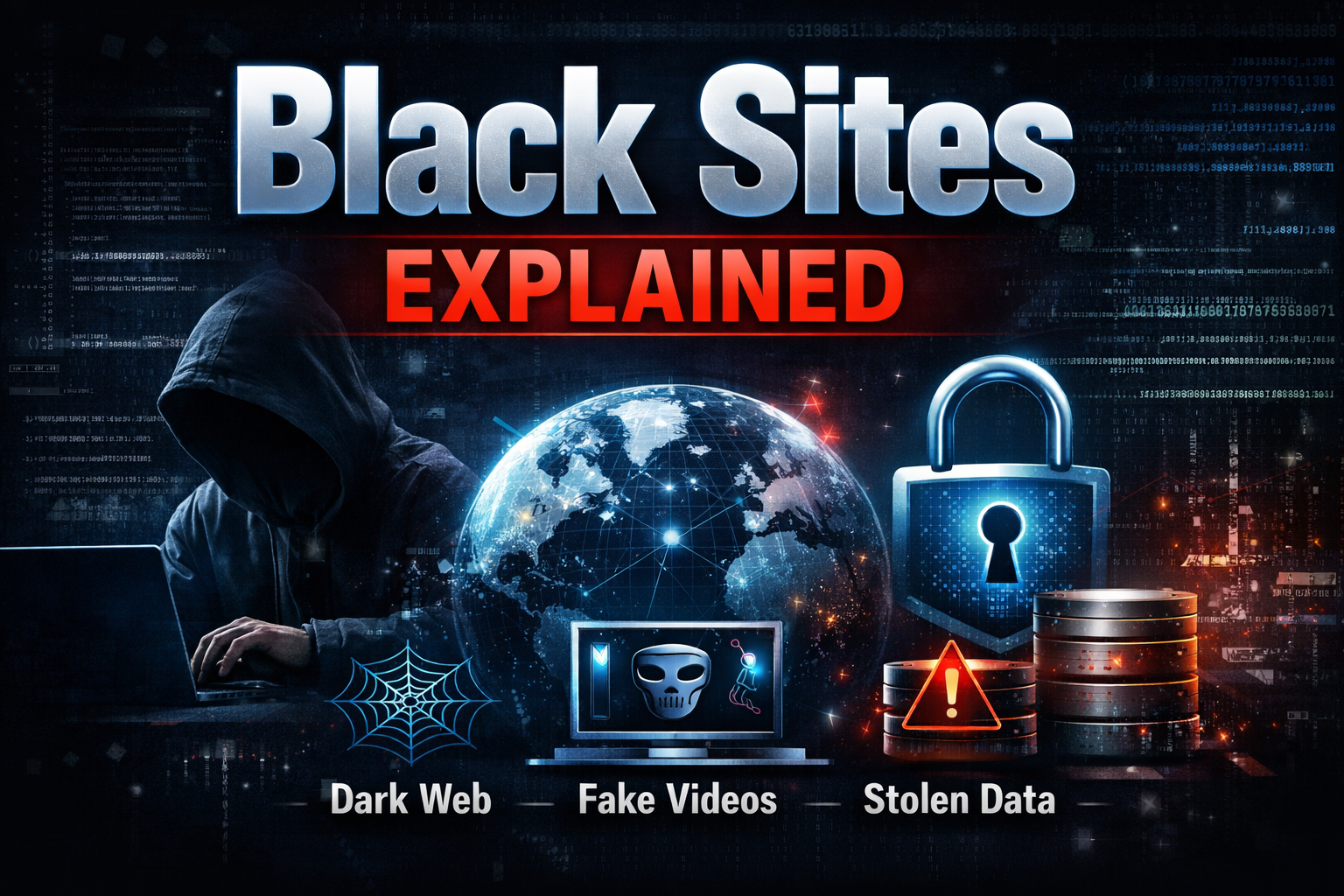
The internet was once considered a place of freedom, knowledge, and opportunity. Today, it is also a battlefield filled with deception, manipulation, and hidden dangers. Fake videos, illegal black sites, and massive data theft have become some of the biggest digital threats of the modern age.
Every day, millions of people unknowingly consume false content, trust manipulated media, and share private information that ends up in the wrong hands. From deepfake videos that look completely real to secret websites selling stolen personal data, the digital world is becoming more dangerous than ever.
This article will take a deep dive into the hidden internet world. You will learn:
- What fake videos really are
- How black sites operate
- How personal data gets stolen
- The dangers behind these activities
- How to protect yourself
Let’s explore the dark side of the online universe.
What Are Fake Videos?
Fake videos are digitally manipulated or completely AI-generated videos designed to mislead people. These videos can make someone appear to say or do something they never actually did.
With the rise of artificial intelligence and deepfake technology, creating realistic fake videos has become frighteningly easy.
Types of Fake Videos
Fake videos generally fall into these categories:
1. Deepfake Videos
Deepfakes use artificial intelligence to replace a person’s face or voice in a video. With advanced tools, criminals can create videos of politicians, celebrities, or even ordinary people doing things they never did.
These videos are often used for:
- Political propaganda
- Fake scandals
- Blackmail
- Social manipulation
2. Edited or Manipulated Videos
Some fake videos are not fully AI-generated but are cleverly edited to change context.
For example:
- Cutting clips to change meaning
- Adding false subtitles
- Mixing different video parts together
These videos spread quickly on social media and mislead thousands of people.
3. AI-Generated News Videos
Now, entire news reports can be faked using AI avatars and robotic voices. Many people cannot even tell the difference between real and fake news anchors anymore.
This is especially dangerous because people trust video content more than text.
Why Fake Videos Are So Dangerous
Fake videos are not just harmless pranks. They can cause serious damage.
Political Manipulation
Fake videos have been used to:
- Spread false election information
- Damage the reputation of leaders
- Create riots and public anger
A single viral fake video can influence millions of people within hours.
Personal Blackmail
Criminals sometimes create fake explicit videos of innocent people and use them for blackmail. Victims are threatened unless they pay money.
Destroying Reputations
Fake videos can ruin careers, relationships, and lives. Even if a video is proven fake later, the damage is often already done.
What Are Black Sites?
The term “black sites” refers to secret or hidden websites that operate outside normal internet rules and laws.
These sites are usually part of the Dark Web – a section of the internet that cannot be accessed through Google or normal browsers.
How Black Sites Work
Black sites are used for illegal activities such as:
- Selling stolen personal data
- Trading hacked accounts
- Sharing illegal content
- Running scams
- Selling fake documents
Most of these websites require special browsers like Tor to access them.
The Connection Between Fake Videos and Black Sites
Fake videos and black sites are often closely connected.
Here is how:
- Criminals create fake videos
- They upload them secretly on black sites
- They sell or distribute them
- They use them for scams or blackmail
Many black sites even sell tools and software used to create deepfakes.
The Massive Business of Stolen Data
One of the biggest activities on black sites is the buying and selling of stolen data.
What Kind of Data Gets Stolen?
Cybercriminals collect and sell:
- Email addresses
- Passwords
- Credit card details
- Phone numbers
- Social media accounts
- Personal photos
- Private documents
This information is worth huge money on the dark web.
How Your Data Gets Into the Wrong Hands
Most people think their data is safe. Unfortunately, that is rarely true.
Common Ways Data Is Stolen
1. Data Breaches
Big companies get hacked, and millions of user details get leaked online.
2. Phishing Scams
Fake emails and websites trick people into giving away their passwords and bank details.
3. Malware and Spyware
Hidden software on phones or computers can secretly steal information.
4. Fake Apps and Websites
Many fake websites collect user data and sell it later.
What Happens to Stolen Data?
Once your data is stolen, it can be used for:
- Identity theft
- Financial fraud
- Creating fake accounts
- Blackmail
- Hacking other accounts
On black sites, criminals sell entire databases full of personal information for very low prices.
Real-Life Dangers of This Dark Digital World
The combination of fake videos, black sites, and stolen data creates a perfect storm of online crime.
Some real-world consequences include:
- Innocent people getting arrested
- Financial accounts being emptied
- Fake scandals ruining families
- Businesses losing reputation
- Elections being manipulated
The digital world is no longer just virtual – it directly affects real lives.
How to Spot Fake Videos
Luckily, there are ways to protect yourself.
Warning Signs of Fake Videos
- Unnatural facial movements
- Strange voice synchronization
- Blurry or distorted edges
- Poor audio quality
- Unverified sources
Always check:
- Who posted the video
- Where it originally came from
- Whether trusted news sources confirm it
How to Protect Your Personal Data
You cannot control black sites, but you can protect yourself.
Important Safety Steps
- Use Strong Passwords
Never use simple passwords like “123456”. - Enable Two-Factor Authentication
This adds an extra layer of security. - Avoid Clicking Unknown Links
Many scams start with a simple click. - Be Careful What You Share Online
Once something is online, it never truly disappears. - Use Antivirus Software
Protect your devices from malware. - Check Website Security
Only enter details on websites with “https”.
The Role of Social Media Platforms
Social media is the main place where fake videos spread.
Platforms like:
- YouTube
- TikTok
- Twitter (X)
often struggle to control fake content.
Even though companies try to remove harmful material, new fake videos appear every minute.
Laws and Regulations
Many countries are now creating laws against:
- Deepfake creation
- Online blackmail
- Data theft
- Fake news distribution
However, technology is moving faster than laws, which makes enforcement difficult.
The Future of Fake Videos and Black Sites
Unfortunately, this problem is only growing.
As AI tools become more advanced:
- Fake videos will look even more real
- Black sites will become harder to track
- Data theft will increase
The next few years will be critical for internet safety.
What Can Be Done?
To fight this digital threat, we need:
- Better technology to detect fakes
- Stricter cybercrime laws
- More awareness among users
- Stronger security systems
Education is one of the most powerful weapons against online deception.
Final Thoughts
The internet is an amazing tool, but it also has a dark side. Fake videos, black sites, and stolen data are serious dangers that affect millions of people every day.For more updates visit here Kainattrendscapes.com
Understanding these threats is the first step toward protecting yourself.
Always remember:
- Not everything you see online is real
- Your personal data is valuable
- Staying careful online is more important than ever
Be smart, stay alert, and never blindly trust what appears on your screen.
Frequently Asked Questions
Q1: What is a deepfake video?
A deepfake video is an AI-generated or AI-edited video that makes a person appear to say or do something they never did.
Q2: Are black sites illegal?
Most black sites operate outside the law and are used for illegal activities.
Q3: Can fake videos be detected?
Yes, but it is becoming harder as AI technology improves.
Q4: How can I keep my data safe?
Use strong passwords, avoid suspicious links, and enable two-factor authentication.
Q5: Is the dark web the same as black sites?
Black sites usually exist within the dark web, but not everything on the dark web is illegal.