






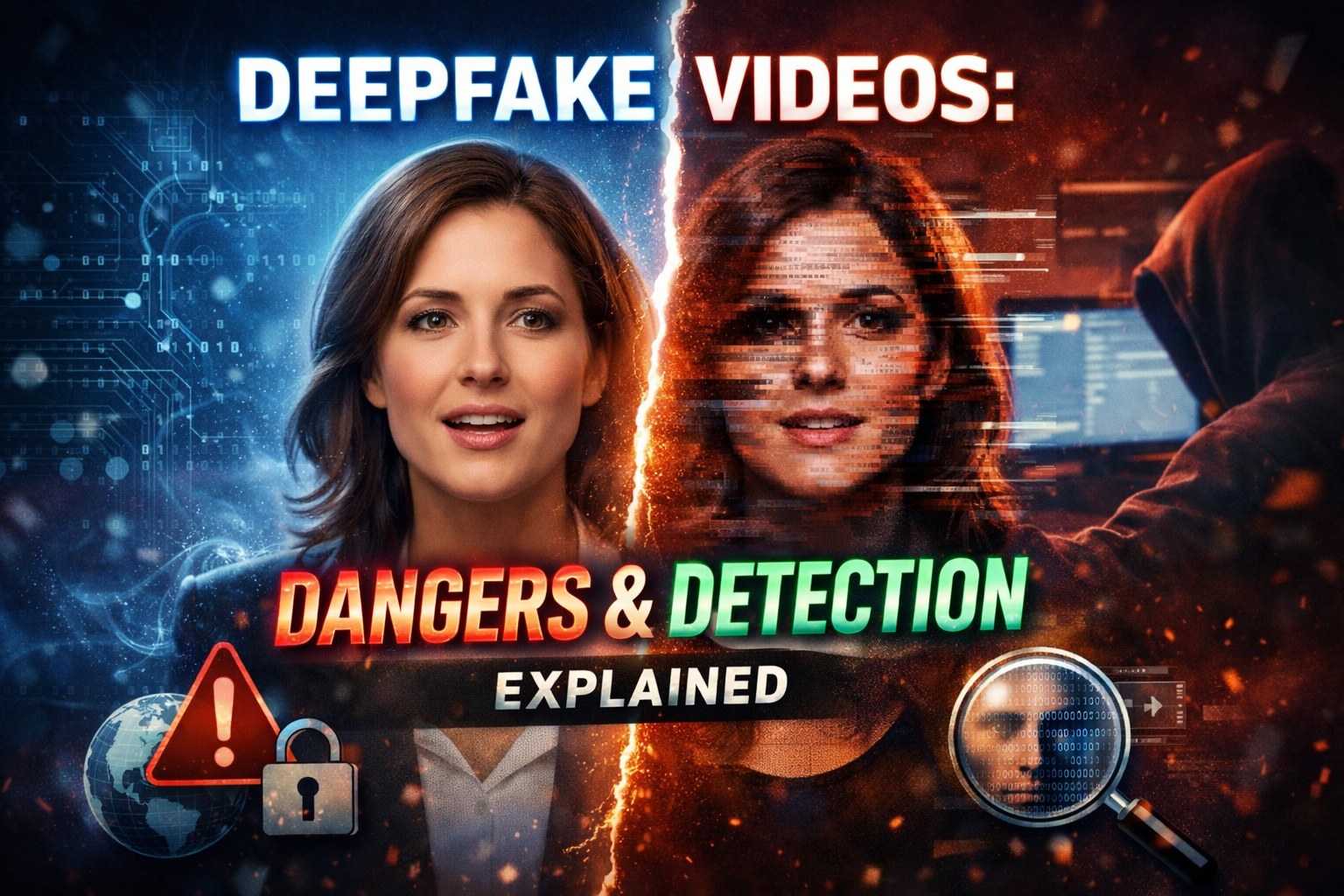
Deepfake videos have rapidly emerged as one of the most talked‑about technologies of the 21st century. What started as a niche research topic has now become a global concern — affecting politics, entertainment, personal privacy, and even national security. But what exactly are deepfake videos? How dangerous are they, and how can we detect them?
In this article, we’ll dive deep into everything you need to know about deepfake videos — from their origins and technical makeup to their societal impact and the latest tools used to fight them.
For more related updates visit here Kainattrendscapes.com
1. What Are Deepfake Videos?
Deepfake videos are digital videos in which a person’s face or voice has been replaced with someone else’s likeness using artificial intelligence (AI) and machine learning techniques. The word “deepfake” comes from the combination of “deep learning” and “fake,” highlighting how AI is used to create content that looks convincingly real.
In a deepfake video, individuals can be made to appear as if they are saying or doing things they never actually said or did. This makes deepfakes incredibly powerful — and potentially harmful — tools.
2. How Do Deepfake Videos Work?
At the technical core of deepfake videos are neural networks, especially a type known as generative adversarial networks (GANs).
Here’s a simple breakdown:
- Generator Network: Produces fake images or video frames.
- Discriminator Network: Tries to determine whether the image or frame is real or fake.
- Through a continuous training cycle, these networks improve until the AI produces video that the discriminator cannot reliably detect as fake.
In essence, deepfake technology allows computers to learn patterns of facial expressions, speech, and movement — and then mimic them convincingly.
3. The History of Deepfakes
Though deepfakes rose to mainstream awareness in the late 2010s, their roots trace back to research labs long before the term was coined.
- 1990s–2000s: Early attempts at digital face swapping and CGI animation laid foundational technology.
- 2017–2018: The term “deepfake” first appeared on online forums where users shared manipulated celebrity videos.
- 2019–2020: Deepfake tools became more accessible to the public, and numerous startups began developing AI‑powered media editing tools.
- 2021–Present: Deepfake videos entered political discourse, widespread social media debates, and cybersecurity discussions as a major threat.
4. Why Deepfake Videos Are Dangerous
While the technology behind deepfake videos is impressive, it is also dangerous in many ways:
A. Political Manipulation
Deepfakes can be used to create false statements from politicians or world leaders, potentially influencing elections or destabilizing governments.
B. Misinformation and Disinformation
When deepfake videos are shared online, they can fuel rumors and public panic by making lies look like truth.
C. Reputation Damage
Individuals — especially public figures — can have their reputations destroyed by fabricated videos showing them in compromising or illegal situations.
D. Blackmail and Extortion
Deepfakes can be used to create compromising videos of private individuals for blackmail.
E. Economic Fraud
Deepfake voice cloning has already been used in scams where fraudsters impersonate CEOs or family members to steal money.
5. Real‑World Examples of Deepfake Incidents
To understand how deepfake videos affect real life, consider these cases:
• Political Deepfakes
In 2020, a manipulated video of US House Speaker Nancy Pelosi was slowed down to make her appear drunk or incoherent — sparking widespread misinformation.
• Celebrity Deepfakes
Countless deepfake videos featuring celebrities in inappropriate scenarios have circulated online, often without consent.
• Corporate Scams
A deepfake audio clip was used to impersonate a company director and convince a firm in the UK to transfer €220,000 to a fraudulent bank account.
These examples highlight that deepfake videos are not just theoretical risks — they are actively being used to deceive and harm.
6. Legal and Ethical Challenges
Because deepfake technology is advancing faster than legislation, many countries are struggling to adapt.
Legal Gaps
Some regions have laws against impersonation, fraud, or non‑consensual pornography, but few have specific deepfake regulations.
Ethical Concerns
Even when a deepfake is used for artistic or humor purposes, ethical questions arise about consent, authenticity, and respect for the person being represented.
Some governments and tech organizations are now crafting laws to penalize malicious use of deepfakes. For example, in the United States, certain states have enacted legislation specifically targeting deepfake creation and distribution ahead of elections.
7. How to Detect Deepfake Videos
Detecting deepfake videos can be very challenging, especially as technology improves. However, there are several tell‑tale signs you can watch for:
A. Irregular Blinking or Facial Movements
Early deepfakes often struggled with natural eye movement.
B. Odd Lighting and Shadows
Deepfake software sometimes fails to correctly simulate consistent lighting across a face.
C. Strange Audio Synchronization
The voice may not perfectly match mouth movements.
D. Unnatural Skin Texture or Artifacting
Tiny distortions or blur can betray manipulation.
E. Metadata Inconsistency
Technical metadata may reveal evidence of editing.
Even with these indicators, deepfakes are becoming more sophisticated — which is why AI‑powered detection tools are now essential.
8. Tools and Technologies for Deepfake Detection
Fortunately, researchers and companies are hard at work building tools to spot deepfake videos.
• AI‑Based Detection Systems
These use machine learning to analyze videos and identify patterns unique to deepfakes.
• Blockchain‑Powered Verification
Some platforms use blockchain to watermark and verify authentic media.
• Browser Plugins
Extensions can flag suspected deepfakes in social feeds.
• Government and Tech Initiatives
Groups like the Deepfake Detection Challenge (DFDC) have released datasets and models to improve detection performance. You can learn more about this effort here: https://ai.facebook.com/diffusion.
Together, these technologies are helping create a more resilient digital ecosystem.
9. Future Trends: Deepfakes and AI
Deepfake technology is evolving fast — and not all developments are negative. Some future trends include:
Positive Uses
✔️ Film and entertainment for digital effects
✔️ Improved dubbing and translation in media
✔️ Virtual avatars in education and training
Risks and Challenges
❌ More realistic deepfakes
❌ Increased accessibility of manipulation tools
❌ New forms of identity fraud
The key takeaway is that deepfake videos will only improve in quality — making detection and regulation more important than ever.
10. How Individuals Can Protect Themselves
Protection doesn’t just happen at the system level. Individuals can also take steps to stay safe:
• Verify the Source
Only trust videos from reputable news outlets or official social media accounts.
• Check Multiple Sources
If a video seems shocking, see whether other outlets are reporting the same content.
• Be Wary of Sensational Content
Deepfakes often rely on surprise or emotion — use critical thinking.
• Strengthen Digital Identity
Avoid sharing sensitive images or videos that could be used in AI training.
• Report Suspicious Content
Platforms like YouTube and TikTok provide reporting tools specifically for manipulated content.
Conclusion
Deepfake videos represent one of the most powerful — and potentially dangerous — technologies of the digital age. While they enable creative and beneficial use‑cases, they also pose serious threats to privacy, security, and truth itself.
As deepfakes continue to evolve, education, awareness, and detection technologies are the best defenses we have. By learning how deepfake videos work and staying vigilant about the signs of manipulation, individuals and societies can mitigate risk and protect integrity in the digital world.