





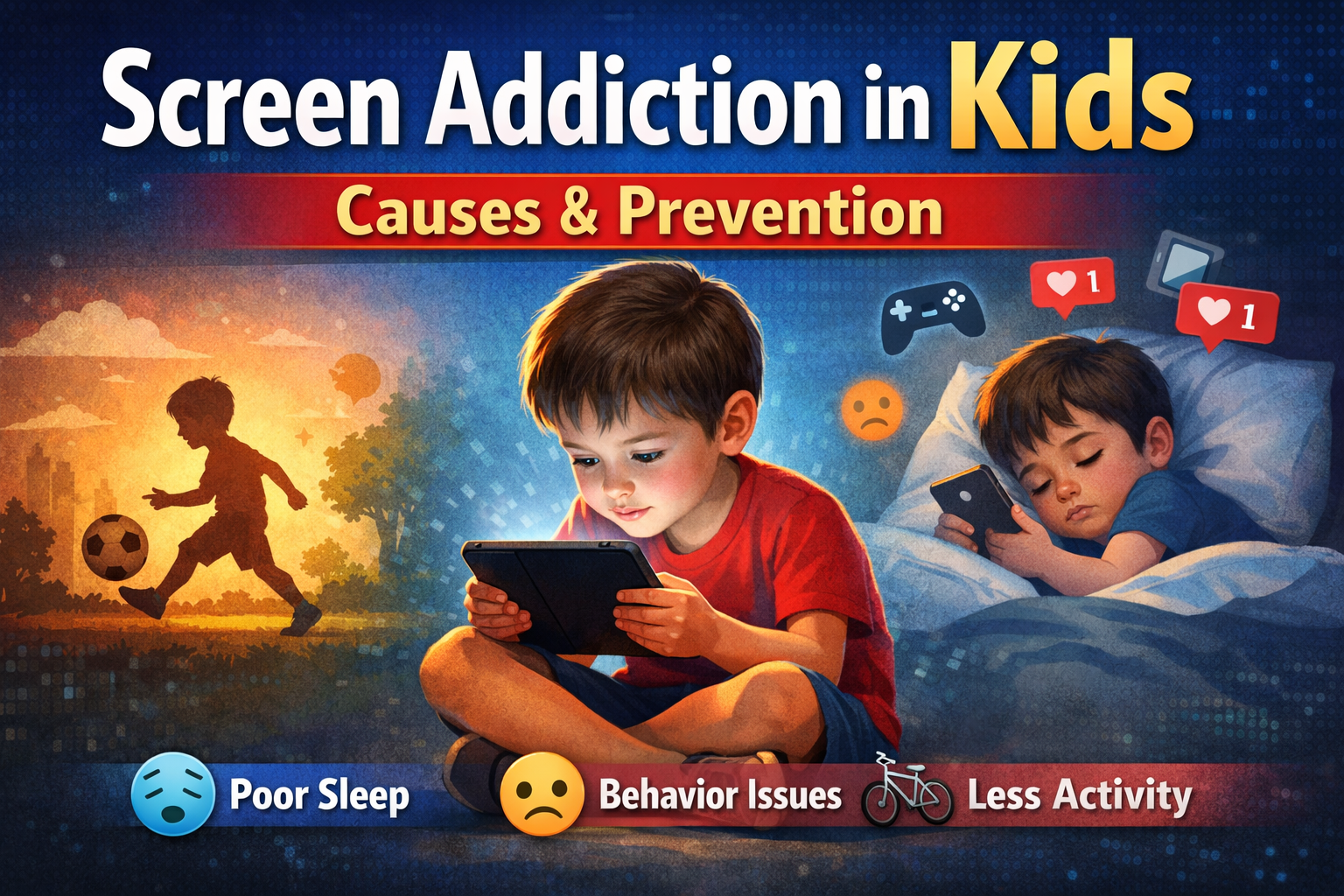
Screen addiction in kids has become a growing concern for parents around the world. In today’s digital age, screens are everywhere. Smartphones, tablets, televisions, and computers are now part of everyday life. Children use them for learning, entertainment, and communication. While technology offers many benefits, too much screen time can harm a child’s physical health, mental wellbeing, and overall development.
Many parents notice that their children become upset, angry, or restless when devices are taken away. Some children prefer screens over outdoor play, family interaction, or even sleep. This is not just a habit—it can develop into screen addiction. Understanding this problem is the first step toward protecting children and helping them develop healthy habits.
What Is Screen Addiction in Kids
Screen addiction is a condition where a child becomes overly dependent on digital devices and cannot control their usage. It is not simply enjoying games or watching videos. It becomes addiction when screen use starts affecting daily life, behavior, sleep, education, and relationships.
Children with screen addiction often think about screens constantly. They may feel unhappy or anxious without access to their devices. Over time, their brain becomes used to constant digital stimulation, making it harder for them to enjoy normal activities.
This problem develops gradually. What starts as harmless entertainment can slowly turn into excessive use if not managed properly.
Why Screen Addiction Is Increasing Rapidly
One of the main reasons screen addiction is increasing is the easy availability of digital devices. Many children now have their own smartphones or tablets at a very young age. Unlike the past, where screen use was limited to television, children today have portable devices available all the time.
Another major reason is the design of modern apps and games. These platforms are created to keep users engaged for as long as possible. They use bright colors, rewards, notifications, and endless content to hold attention. Children’s brains are especially sensitive to these rewards, making it harder for them to stop.
The modern lifestyle also contributes to this problem. Many parents are busy, and screens are sometimes used to keep children occupied. Online classes and digital learning have also increased screen exposure. Over time, frequent use becomes a habit, and habit can turn into addiction.
Early Warning Signs of Screen Addiction
Recognizing early warning signs can help parents take action before the problem becomes serious. One common sign is excessive time spent on devices. Children may use screens for several hours daily without breaks.
Another sign is irritability when screen time is reduced. Children may become angry, frustrated, or upset when asked to stop using devices. Loss of interest in outdoor play and hobbies is also a warning sign. Activities they once enjoyed may no longer attract them.
Sleep problems are very common. Children may stay awake late using devices or have difficulty falling asleep. Some children may also show reduced focus in school and lower academic performance.
Social withdrawal is another important sign. Children may prefer screens over spending time with family and friends.
Physical Health Effects of Screen Addiction
Excessive screen use can affect a child’s physical health in several ways. One of the most common problems is eye strain. Staring at screens for long periods can cause eye discomfort, dryness, and blurred vision.
Screen addiction also reduces physical activity. Children who spend more time sitting with devices get less exercise. This can lead to weight gain, weak muscles, and poor physical fitness.
Poor posture is another concern. Many children use devices while sitting or lying in unhealthy positions. This can cause neck pain, back pain, and posture problems over time.
Sleep disturbance is one of the most serious effects. The blue light from screens affects the brain’s sleep signals, making it harder to fall asleep. Poor sleep affects growth, mood, and overall health.
Mental and Emotional Effects
Screen addiction can affect a child’s mental and emotional wellbeing. Excessive screen use can increase irritability, anxiety, and mood swings. Children may become more impatient and less able to handle frustration.
Constant digital stimulation reduces attention span. Children may find it harder to focus on schoolwork or other tasks. Their brain becomes used to fast-changing content, making normal activities feel boring.
Screen addiction can also affect emotional development. Children learn emotional skills through real-world interaction. Too much screen time reduces opportunities to develop communication and social skills.
In some cases, excessive screen use may increase feelings of loneliness and isolation.
Impact on Brain Development
Childhood is a critical period for brain development. The brain develops through physical activity, social interaction, and real-world experiences. Excessive screen use can interfere with this process.
Screens provide passive stimulation, but healthy brain development requires active learning and interaction. Outdoor play, creativity, and social interaction help develop important brain connections.
Too much screen exposure may affect memory, attention, and learning ability. This can impact academic performance and cognitive development.
Social and Behavioral Effects
Screen addiction can affect how children interact with others. Children who spend excessive time on screens may have fewer social skills. They may struggle with communication, empathy, and cooperation.
Family relationships may also suffer. Children may become less interested in family activities and conversations.
Behavioral problems may develop, including impatience, anger, and reduced self-control.
These effects can influence personality and social development over time.
Long-Term Consequences
If screen addiction is not addressed, it can lead to long-term problems. These may include poor academic performance, reduced social skills, and ongoing dependence on digital devices.
Physical health problems such as obesity and poor fitness may continue into adulthood. Sleep problems and mental health issues may also persist.
Early prevention and proper guidance can prevent these long-term effects.
How Parents Can Prevent Screen Addiction
Prevention starts with setting clear and healthy limits. Parents should establish daily screen time limits based on the child’s age. Consistency is important.
Encouraging outdoor play is one of the best solutions. Physical activity improves health and reduces screen dependence.
Creating screen-free times, such as during meals and before bedtime, helps build healthy habits. Children should not use screens at least one hour before sleep.
Parents should also encourage hobbies such as reading, drawing, sports, and creative activities.
Spending quality family time together reduces reliance on screens. Children who feel engaged and connected are less likely to develop screen addiction.
According to the American Academy of Pediatrics, parents should create consistent screen time limits and encourage healthy offline activities to support proper child development.
Creating Healthy Digital Habits
Teaching children responsible screen use is essential. Parents should explain screen addiction in kids and why limits are important and help children understand balance.
Devices should not be used as a reward or punishment. This can increase emotional dependence.
Parents should also set a good example. Children learn from observing adults. Limiting personal screen use can influence children positively & stop screen addiction in kids.
Keeping devices out of bedrooms can improve sleep and reduce excessive use.
When to Seek Professional Help
If screen addiction becomes severe and affects health, sleep, or behavior, professional help may be needed. Doctors and child psychologists can provide guidance and treatment.
Early intervention can prevent long-term problems and help children develop healthy habits.
Conclusion
Screen addiction in kids is a modern challenge, but it can be prevented and managed with proper awareness and guidance. Technology itself is not harmful, but excessive and uncontrolled use can affect a child’s physical health, mental development, and social wellbeing.
Parents play the most important role in guiding children toward healthy habits. By setting limits, encouraging physical activity, and promoting balanced lifestyles, children can enjoy technology safely without becoming dependent on it.
Healthy screen habits developed during childhood can protect children’s wellbeing and ensure proper growth, development, and a healthier future. For more practical parenting and child wellness tips, read our detailed guide on healthy lifestyle habits and positive and negative effects on children.
What is screen addiction in kids?
Screen addiction in kids is excessive and uncontrolled use of devices like smartphones, tablets, or television that affects sleep, behavior, health, and daily activities.
How many hours of screen time is safe for children?
Most experts recommend no more than 1–2 hours of recreational screen time per day for school-age children, with less for younger kids.
What are the main signs of screen addiction in kids?
Common signs include irritability without devices, excessive screen use, poor sleep, reduced outdoor activity, and loss of interest in hobbies.
Can screen addiction affect brain development?
Yes, excessive screen use can affect attention span, learning ability, sleep quality, and emotional development, especially in younger children.
How can parents reduce screen addiction in kids?
How can parents reduce screen addiction?