






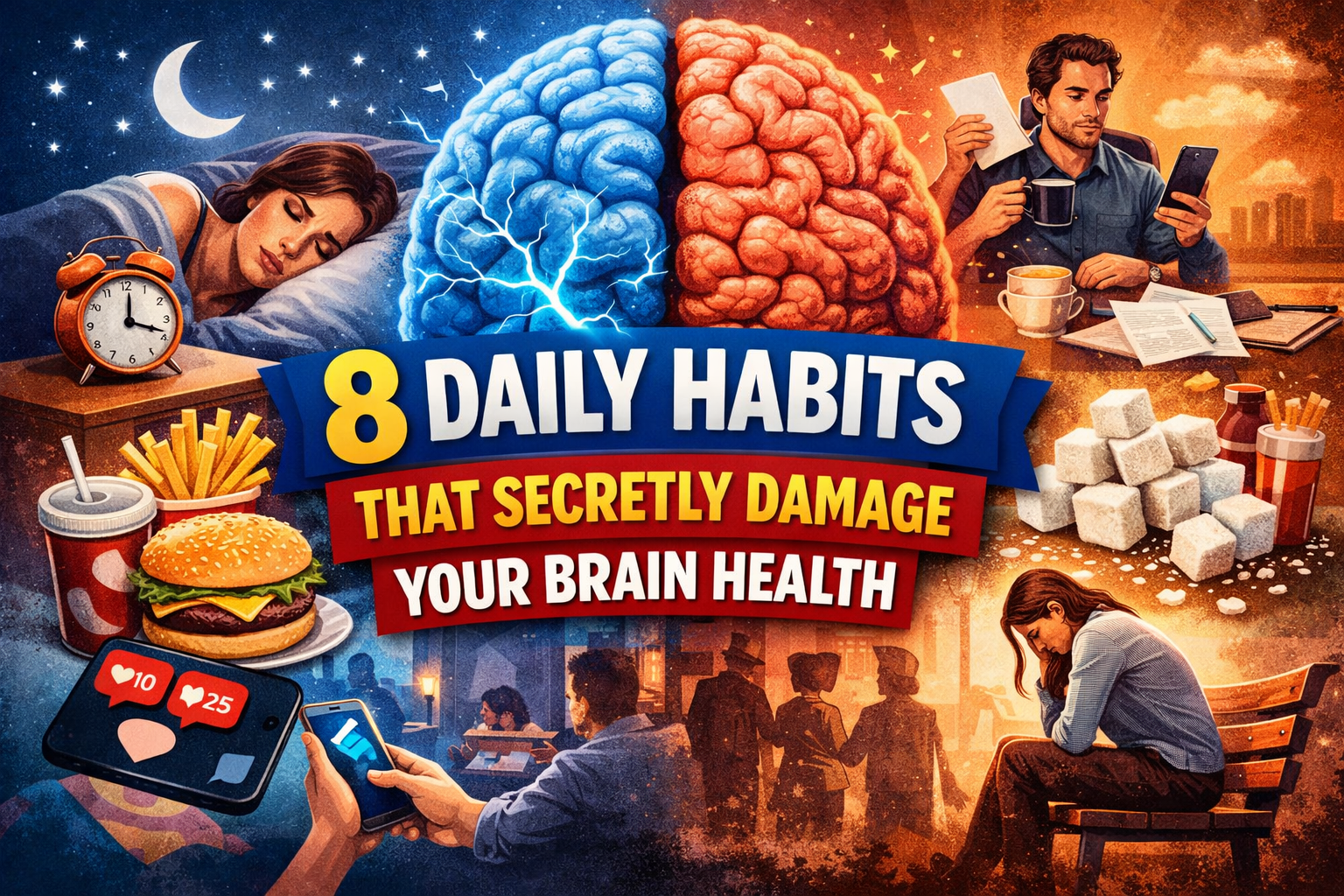
8 Daily Habits That Secretly Damage Your Brain Health are often part of everyday routines that many people never question. From poor sleep patterns to constant screen exposure, these habits can slowly affect memory, concentration, and overall cognitive health.
The human brain is one of the most complex and powerful organs in the body. It controls everything from thoughts and emotions to movement, memory, and decision-making. Every second, millions of signals travel through the brain to keep the body functioning smoothly.
Despite its importance, brain health is something many people rarely think about in their daily lives. Most individuals focus on physical fitness or maintaining a healthy diet but forget that the brain also needs proper care and attention.
Modern lifestyles have introduced several habits that slowly affect mental well-being. Long hours spent on phones and computers, poor sleep patterns, unhealthy eating, and constant stress have become common parts of everyday life. While these habits may not seem harmful at first, they can gradually affect concentration, memory, and emotional balance.
Many people experience brain fatigue without realizing the cause. Feeling mentally exhausted, struggling to focus, or forgetting small details could be signs that daily habits are affecting cognitive health.
The good news is that brain health can improve with small lifestyle adjustments. By identifying habits that harm the brain and replacing them with healthier routines, it is possible to strengthen memory, boost focus, and maintain mental clarity.
In this article, we will explore eight everyday habits that may secretly damage brain health and practical steps you can take to protect your mind for the long term.
According to research on brain health and cognitive function, maintaining healthy daily routines can significantly reduce the risk of cognitive decline over time.
1. Poor Sleep Routine
Sleep is essential for the brain to function properly. While the body rests during sleep, the brain remains highly active. It processes information from the day, organizes memories, and removes harmful waste products that build up in brain cells.
When people do not get enough sleep, these processes cannot happen effectively. As a result, memory, learning ability, and decision-making may begin to suffer.
A poor sleep routine often develops due to late-night screen use, irregular work schedules, or stress. Many individuals go to bed at different times each night, which disrupts the body’s natural internal clock.
Over time, lack of sleep can cause several mental health issues, including difficulty concentrating, mood swings, irritability, and reduced productivity.
Creating a consistent sleep schedule is one of the best ways to support brain health. Going to bed and waking up at the same time each day helps regulate the body’s natural rhythm. Reducing screen exposure before bedtime and maintaining a quiet, comfortable sleep environment can also improve sleep quality.
Good sleep is not just about feeling rested; it plays a vital role in protecting long-term brain health.
2. Excessive Screen Time
Digital technology has transformed modern life. Smartphones, laptops, and tablets allow people to communicate, work, and access information instantly. However, spending too much time staring at screens can place a heavy burden on the brain and affect brain health.
Continuous exposure to digital content forces the brain to process large amounts of information rapidly. Social media feeds, notifications, videos, and online messages constantly compete for attention.
This overload can reduce the brain’s ability to focus on a single task. Many people notice that after long periods of screen use, they feel mentally drained or distracted.
Excessive screen time can also interfere with sleep. The blue light emitted by digital devices can disrupt the body’s production of melatonin, the hormone responsible for regulating sleep.
To protect brain health, it is important to take regular breaks from screens. Simple practices such as the 20-20-20 rule—looking away from the screen every 20 minutes for 20 seconds—can reduce mental strain.
Spending time outdoors, reading physical books, or engaging in creative hobbies can also help balance digital exposure.
3. Skipping Breakfast
Breakfast provides the body and brain with the fuel needed to start the day. After several hours without food during sleep, blood sugar levels drop, leaving the brain low on energy.
When people skip breakfast, the brain must operate without sufficient nutrients. This can lead to reduced concentration, slower thinking, and lower productivity during the morning hours.
Research has shown that individuals who eat a balanced breakfast often perform better in tasks that require attention, memory, and problem-solving.
A healthy breakfast does not need to be complicated. Foods rich in protein, fiber, and healthy fats help provide steady energy throughout the day. Examples include eggs, yogurt, whole-grain toast, fruits, and nuts.
Choosing nutritious foods in the morning can improve brain performance and help maintain stable energy levels.
4. Constant Multitasking
Many people take pride in their ability to multitask. In a busy world filled with deadlines and responsibilities, handling multiple tasks at once may seem like an efficient strategy.
However, the brain is not designed to focus on several complex activities simultaneously. Instead of performing tasks at the same time, the brain rapidly switches between them.
This constant switching consumes mental energy and reduces efficiency. It can lead to mistakes, mental fatigue, and difficulty remembering information.
Over time, habitual multitasking may weaken the brain’s ability to concentrate deeply on important tasks.
A more effective approach is single-tasking—focusing on one activity at a time. Completing tasks in sequence allows the brain to work more efficiently and improves overall productivity.
Practicing mindfulness and limiting distractions can help strengthen attention and cognitive performance.
5. High Sugar Consumption
Sugar is present in many foods and drinks, from desserts and sodas to processed snacks. While small amounts of sugar are acceptable, excessive consumption can negatively affect both physical and mental health.
High sugar intake has been linked to inflammation in the body, which can also impact brain cells. Over time, excessive sugar consumption may impair memory and learning ability.
Sugar spikes also cause rapid increases in energy followed by sudden crashes. This cycle can make it difficult to maintain consistent focus throughout the day.
Reducing sugary foods and beverages can benefit brain health significantly. Replacing processed snacks with natural options such as fruits, nuts, and whole grains provides steady energy without harmful spikes.
A balanced diet rich in nutrients supports stronger brain function and overall well-being.
6. Lack of Physical Activity
Exercise is widely known for improving physical health, but its benefits for the brain are equally important. Physical activity increases blood circulation, delivering oxygen and essential nutrients to brain cells.
Regular movement also stimulates the release of chemicals called endorphins and neurotransmitters that enhance mood and cognitive function.
Unfortunately, many modern lifestyles involve long periods of sitting. Office jobs, online entertainment, and digital work often reduce opportunities for movement.
A sedentary lifestyle can lead to mental fatigue, reduced concentration, and lower energy levels.
Incorporating physical activity into daily routines does not require intense workouts. Activities such as walking, stretching, dancing, or cycling can significantly support brain health.
Even a short daily walk can refresh the mind and improve mental clarity.
7. Chronic Stress
Stress is a natural response that helps people deal with challenges. In short bursts, stress can improve alertness and motivation.
However, when stress becomes constant, it can harm both the body and the brain.
Long-term stress triggers the continuous release of hormones that may interfere with memory formation and emotional balance. People experiencing chronic stress often report difficulty concentrating, irritability, and mental exhaustion.
Over time, unmanaged stress may contribute to anxiety and other mental health problems.
Learning how to manage stress effectively is essential for protecting brain health. Techniques such as meditation, deep breathing, journaling, and spending time in nature can help calm the mind.
Regular relaxation practices allow the brain to recover and maintain emotional stability.
8. Social Isolation
Human beings are naturally social creatures. Conversations, shared experiences, and relationships stimulate the brain and support emotional health.
When people become socially isolated for long periods, the brain receives less stimulation from meaningful interaction.
Loneliness can increase the risk of depression and cognitive decline. Without regular social engagement, mental activity may decrease, affecting memory and mood.
Maintaining social connections is an important part of mental wellness. Talking with friends, spending time with family, or participating in community activities helps keep the brain active and engaged.
Even simple daily interactions—such as chatting with a neighbor or calling a loved one—can have a positive impact on brain health.
Signs Your Brain May Need More Care
Sometimes the brain sends warning signals that lifestyle habits are affecting cognitive health. Recognizing these signs early can help prevent more serious issues.
Common signs include:
- Frequent forgetfulness
- Difficulty concentrating
- Mental fatigue
- Mood swings or irritability
- Trouble making decisions
- Reduced creativity or motivation
While occasional mental fatigue is normal, persistent symptoms may indicate the need to improve daily habits and prioritize brain health.
Brain-Boosting Foods to Include in Your Diet
Nutrition plays a key role in maintaining healthy brain function. Certain foods contain nutrients that support memory, concentration, and mental clarity.
Some brain-friendly foods include:
- Fatty fish: Rich in omega-3 fatty acids that support brain cell structure
- Blueberries: Contain antioxidants that protect brain cells
- Nuts and seeds: Provide healthy fats and vitamin E
- Leafy greens: Offer essential vitamins and minerals
- Whole grains: Deliver steady energy to the brain
Incorporating these foods into daily meals can help maintain strong cognitive performance.
How to Protect Your Brain Health
Protecting brain health does not require drastic lifestyle changes. Small, consistent habits can make a significant difference over time.
Some simple strategies include:
- Getting 7–8 hours of quality sleep each night
- Limiting unnecessary screen time
- Eating balanced, nutrient-rich meals
- Staying physically active
- Practicing stress-management techniques
- Maintaining meaningful social connections
- Engaging in mentally stimulating activities such as reading or puzzles
These practices help strengthen the brain and improve overall quality of life.
Conclusion
The brain plays a vital role in every aspect of daily life, yet it is often affected by habits people rarely notice. Poor sleep, excessive screen time, unhealthy diets, and chronic stress can slowly impact mental clarity and cognitive performance.
Fortunately, brain health can be improved through simple lifestyle adjustments. Developing healthy routines such as regular exercise, balanced nutrition, adequate sleep, and social interaction can significantly strengthen mental well-being.
By becoming more aware of daily habits and making positive changes, anyone can support a healthier brain and enjoy greater focus, energy, and emotional balance in everyday life.
Many experts believe that the modern digital lifestyle trends are also changing the way our brains function and process information in everyday life.
FAQs
1. What habits damage brain health the most?
Lack of sleep, excessive stress, unhealthy diets, and constant screen exposure are some of the most common habits that can negatively affect brain function.
2. Can sleep deprivation affect memory?
Yes. Sleep is essential for memory consolidation. Without adequate rest, the brain struggles to store and process information.
3. How does sugar affect the brain?
High sugar consumption may cause inflammation and disrupt stable energy levels, which can impact concentration and memory.
4. What activities improve brain health?
Reading, exercising, learning new skills, socializing, and maintaining a balanced diet can help improve cognitive function.
5. Is multitasking harmful for concentration?
Yes. Frequent multitasking forces the brain to switch rapidly between tasks, reducing focus and increasing mental fatigue.