





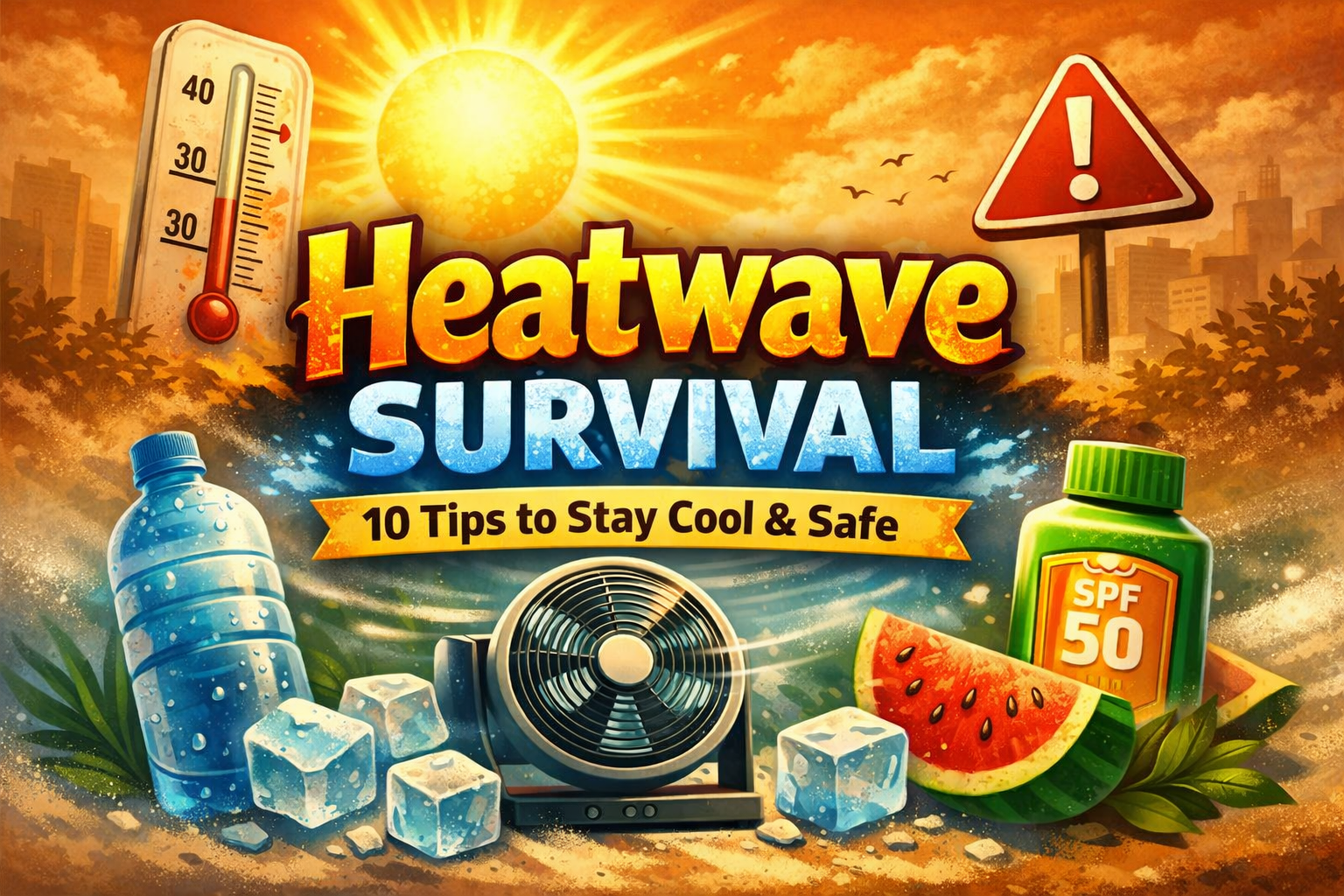
Heatwave survival tips have become essential as temperatures continue to rise every year. Extreme heat doesn’t just make you uncomfortable—it affects your energy, sleep, and overall health. Many people underestimate how dangerous prolonged heat exposure can be until they start feeling constant fatigue, dehydration, or headaches.
I personally experienced this during peak summer. Even after getting enough sleep, I felt tired all day. My focus dropped, and simple tasks felt exhausting. Once I started making small changes to my routine, hydration, and environment, everything improved.
This guide shares practical, real-life strategies that help you stay cool, safe, and productive during extreme heat. For better nighttime rest during hot weather, try incorporating these evening habits that improve sleep alongside your heatwave survival tips.
💡 My Personal Experience with Heatwaves
Last summer was a turning point for me. I remember waking up feeling tired even after a full night’s sleep. By midday, I would feel drained, unfocused, and slightly irritated without any clear reason. At first, I blamed my routine, screen time, and even my diet—but nothing seemed to fix the problem.
It wasn’t until I paid attention to the heat that everything started to make sense. I realized I wasn’t drinking enough water, I was working during peak heat hours, and my room was trapping heat all day.
Once I made small adjustments—like drinking water regularly, improving airflow, and shifting my work to early mornings—I noticed a huge difference. My energy levels improved, my sleep got better, and I felt more in control of my day.
That experience taught me one important lesson:
👉 You don’t need drastic changes—simple, consistent habits can completely change how your body handles extreme heat. After my self experience i gave u heatwave survival tips.
What Happens to Your Body in Extreme Heat
When temperatures rise, your body works harder to cool itself by sweating. This process leads to:
- Loss of water and electrolytes
- Increased heart rate
- Low energy levels
- Risk of heat exhaustion or heatstroke
Ignoring these effects can lead to serious health issues over time.
1. Stay Hydrated the Smart Way
Drinking water is important, but consistency matters more than quantity.
- Drink small amounts throughout the day
- Add electrolytes occasionally
- Include natural drinks like lemon water
Avoid sugary drinks and too much caffeine, as they can increase dehydration.
From personal experience, once I started drinking water regularly instead of waiting until I felt thirsty, my energy improved significantly.
2. Use Simple Cooling Techniques
You don’t always need air conditioning to stay cool.
- Place a bowl of ice in front of a fan
- Keep curtains closed during the day
- Turn off unnecessary electronics
These small changes can noticeably reduce indoor heat.
3. Avoid Peak Heat Hours
The hottest part of the day is usually between 12 PM and 4 PM.
- Schedule outdoor work in the morning
- Stay indoors during peak heat
- Resume activities in the evening
This simple adjustment helps protect your body from extreme stress.
4. Improve Sleep in Hot Weather
Hot nights can disturb your sleep and leave you feeling tired.
- Use lightweight cotton bedding
- Keep airflow steady in your room
- Take a lukewarm shower before bed
5. Eat Cooling Foods
Your diet has a direct impact on your body temperature.
Best options include:
- Watermelon
- Cucumber
- Yogurt
- Fresh fruits
Avoid heavy, fried, and spicy foods, as they can increase body heat and make you feel sluggish.
⚡ Best Drinks to Stay Cool and Energized
Staying hydrated isn’t just about water—what you drink matters.
- Lemon water with a pinch of salt
- Coconut water for natural electrolytes
- Fresh fruit juices (without added sugar)
- Buttermilk or yogurt-based drinks
These drinks help maintain hydration levels and keep your energy stable throughout the day.
🍉 Foods That Act Like Natural Coolants
Beyond hydration, some foods actively help lower body temperature:
- Cucumber and watermelon – high water content, cooling effect
- Mint leaves – add to drinks or salads for instant refreshment
- Yogurt and buttermilk – aid digestion and keep you cool internally
- Coconut water – replenishes electrolytes naturally
💡 Extra tip: Keep fruits in the fridge during summer—they feel more refreshing and help fight heat fatigue.
6. Wear Breathable Clothing
Clothing plays a big role in how your body handles heat.
- Choose cotton or linen fabrics
- Wear loose-fitting clothes
- Prefer light colors
Tight and dark clothing traps heat and increases discomfort.
7. Protect Your Skin from Sun Exposure
Direct sunlight can damage your skin and increase heat stress.
- Apply sunscreen regularly
- Wear sunglasses
- Cover your head when outdoors
Taking these precautions helps prevent long-term damage.
8. Recognize Heatstroke Warning Signs
Heatstroke is a serious condition that requires immediate attention.
Watch for:
- High body temperature
- Dizziness
- Nausea
- Confusion
If symptoms worsen, seek medical help immediately.
9. Keep Your Home Cool
A cooler indoor environment makes a big difference.
- Close curtains during the day
- Open windows at night
- Reduce use of heat-producing devices
Even small adjustments can improve comfort significantly.
10. Adjust Your Daily Routine
Instead of fighting the heat, adapt your lifestyle.
- Wake up early
- Take regular breaks
- Avoid overexertion
These habits help maintain your energy throughout the day.
🌿 Natural Ways to Reduce Body Heat Quickly
Sometimes your body needs instant cooling, especially after coming from outside.
- Wash your face and hands with cool water
- Soak your feet in cold water for 10–15 minutes
- Use a damp cloth on your neck and wrists
- Drink chilled (not icy) fluids
These simple methods provide quick relief and help your body recover faster from heat exposure.
🧴 Skincare Essentials for Hot Weather
Heat and sun exposure can cause dryness, irritation, or acne flare-ups. Using the right products keeps your skin healthy during extreme heat.
Recommended products:
- Cleanser: CeraVe Hydrating Facial Cleanser – gentle, removes sweat and oil without drying
- Moisturizer: Neutrogena Hydro Boost Gel-Cream – lightweight, keeps skin hydrated in heat
- Sunscreen: La Roche-Posay Anthelios SPF 50 – protects against UVA/UVB damage
- Face Mist: Evian Mineral Water Facial Spray – instantly cools and refreshes skin
💡 Tip: Apply sunscreen 20 minutes before going out and reapply every 2–3 hours.
🛒 Useful Products for Daily Heat Protection
Some additional products can make handling heat easier:
- Cooling Gel Sheets – instant relief on forehead or neck (e.g., Kawaii Cooling Gel Pads)
- Portable Handheld Fans – battery-operated, perfect for outdoor use
- Aloe Vera Gel – soothes sunburn or heat irritation (e.g., Nature Republic Aloe Vera Gel)
- Hydrating Mist Spray – for face and body refreshment during long days outdoors
These products aren’t mandatory, but they improve comfort and help prevent heat-related stress.
🌬️ Tips for Staying Cool Outdoors
If you must go out during peak heat, a few extra steps make a big difference:
- Wear a wide-brimmed hat and sunglasses
- Use portable cooling fans or misting bottles
- Carry a water bottle at all times
- Opt for breathable fabrics like cotton or linen
💡 Personal trick: I always keep a small microfiber towel soaked in cold water—it’s easy to carry and very refreshing during hot afternoons.
🚫 Common Mistakes to Avoid During a Heatwave
Many people unknowingly make mistakes that worsen heat effects because they dont know heatwave survival tips.
- Skipping water until feeling thirsty
- Going outside without protection
- Eating heavy meals during the day
- Ignoring early signs of dehydration
Avoiding these mistakes can protect your health and prevent serious issues during extreme heat.
Conclusion
Heatwaves are becoming more common, but they don’t have to disrupt your life. By following these heatwave survival tips, you can stay safe, improve your comfort, and maintain your daily productivity. The key is not to fight the heat, but to understand it and adapt your habits accordingly. Even small adjustments—like staying hydrated, choosing the right foods, and avoiding peak heat hours—can protect your body from unnecessary stress.
What truly makes a difference is consistency. It’s not about making drastic changes overnight, but about building simple daily habits that support your well-being. When you start paying attention to how your body responds to heat, you naturally make better choices that keep you energized and focused throughout the day. Learn more about heat risks in this heat and health safety guide.
As temperatures continue to rise each year, being prepared is no longer optional—it’s a necessity. By applying these practical strategies, you can turn even the hottest days into manageable ones, staying cool, healthy, and in control no matter how intense the weather gets.
❓ FAQs
How much water should I drink during a heatwave?
You should aim for 8–10 glasses of water daily, and increase it if you are sweating heavily or spending time outdoors. Small sips throughout the day are more effective than drinking large amounts at once. Adding a pinch of salt or electrolytes can help maintain your body’s balance and prevent dehydration.
What is the best time to go outside?
The safest times are early morning or late evening, when temperatures are lower and the sun is less intense. If you must be outside during the day, stay in shaded areas, wear a hat and sunglasses, and keep a water bottle handy. Even short breaks in the shade can help your body cool down.
Can hot weather affect sleep?
Yes, heat can significantly reduce sleep quality by making it harder for your body to relax. Poor airflow, heavy bedding, or high room temperatures can lead to restless nights. To improve sleep, use lightweight cotton sheets, keep your room ventilated, and take a lukewarm shower before bed to help your body cool naturally.
Which foods help reduce body heat?
Water-rich and light foods are your best options. Fresh fruits like watermelon, cucumber, and citrus fruits hydrate and cool your body. Yogurt, buttermilk, and salads with mint or leafy greens also help regulate internal temperature. Avoid heavy, fried, or very spicy foods, as they can increase internal heat and make you feel sluggish.
Is air conditioning necessary?
No, AC is not strictly necessary if you use smart cooling strategies. Fans, natural ventilation, blackout curtains, and staying hydrated can effectively manage indoor heat. Portable cooling products like mist sprays, cooling towels, or aloe vera gel can also help you stay comfortable without relying on AC.