





In today’s world, your phone is no longer just a device — it has quietly become a powerful force shaping how you think, act, and spend your entire day. From the moment you wake up to the second you fall asleep, your phone is influencing your decisions in ways you don’t even notice.
You may believe you are in control, but the truth is very different.
This article explores how your phone is secretly controlling your daily routine, why it happens, and how you can take your control back.
My Personal Experience With Phone Controlling My Daily Routine
I didn’t realize how much my phone was controlling my daily routine until one random day when I checked my screen time. It showed more than 7 hours — and honestly, I couldn’t even remember what I had done on my phone.
That moment felt strange.
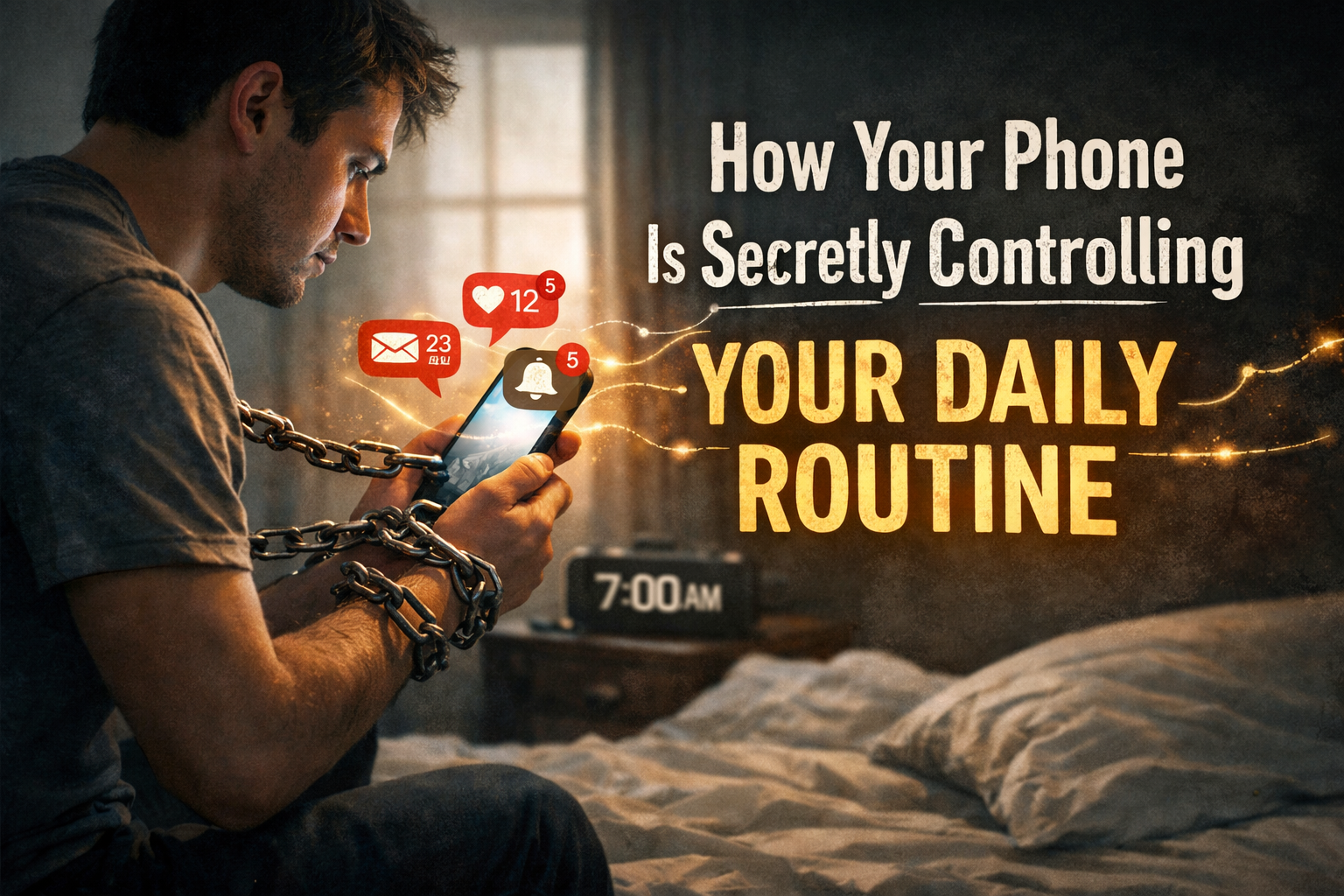
I started thinking about my day. I woke up and immediately grabbed my phone. I scrolled through notifications, watched short videos, checked messages, and before I knew it, almost an hour was gone — and I was still in bed.
At first, it didn’t feel like a problem.
It felt normal.
But slowly, I began noticing small changes in my routine. My focus started getting weaker. Even while working, I felt the urge to check my phone every few minutes. Sometimes I would open an app without even realizing why.
It became automatic.
One of the biggest signs that my phone was controlling my daily routine was my inability to stay present. Whether I was eating, sitting with family, or even trying to relax, my attention was always divided.
Half of me was in the real world.
The other half was inside my cell ph.
I also noticed how it affected my sleep. I used to go to bed on time, but then scrolling became a habit. “Just 5 minutes” would turn into an hour. My mind stayed active, and falling asleep became harder.
The worst part?
I always felt tired the next day.
That’s when I realized this wasn’t just a habit anymore — it was a pattern that was silently controlling my routine.
So I decided to test something.
For a few days, I stopped using my phone right after waking up. Instead, I gave myself some quiet time. The difference was immediate. My mind felt clearer, and my mornings became more peaceful.
I also turned off unnecessary notifications. That single step reduced distractions more than I expected.
Slowly, I started gaining control again.
I’m not perfect even now. I still use my mobile a lot — but the difference is awareness. Now I know when I’m using it intentionally and when it’s starting to control me.
And that awareness changes everything.
The First Thing You Touch Every Morning
Be honest — what’s the first thing you do after waking up?
Most people reach for their phone before even getting out of bed. Notifications, messages, social media updates — they instantly grab your attention.
This small habit sets the tone for your entire day.
Instead of starting your morning with clarity, your brain gets flooded with information. This creates mental noise before your day even begins.
Over time, this habit trains your brain to depend on external stimulation rather than internal focus.
The Hidden Psychology Behind Mobile Usage
Your phone is not random. It is designed to keep you hooked.
Apps use psychological triggers like:
- Notifications
- Infinite scrolling
- Likes and comments
- Personalized content
These features activate reward systems in your brain, making you want to check your ph0ne again and again.
Research shows that excessive smartphone use can turn into a behavioral addiction, where users lose control over how often they check their device.
This is not just habit — it is conditioning.
How Your Phone Controls Your Attention
Have you ever picked up your phone “just for a minute” and ended up scrolling for an hour?
That’s not an accident.
Studies show that smartphone overuse is linked with reduced productivity and frequent interruptions in daily tasks.
Your brain gets used to short bursts of content, making it harder to focus on deeper work.
Signs your attention is being controlled:
- You can’t focus without checking your phone
- You switch apps constantly
- You struggle to finish simple tasks
Your phone is training your brain to avoid boredom — but boredom is where creativity begins.
The Illusion of Productivity
Many people believe using their phone means they are being productive.
Checking emails, watching “educational” videos, reading posts — it feels useful.
But in reality, this often leads to passive consumption instead of meaningful action.
A common pattern:
- You plan to work
- You check your phone
- You lose track of time
- You feel busy but achieve nothing
This is one of the biggest hidden traps of modern life.
Your Sleep Is Being Controlled Too
Your phone doesn’t just control your day — it controls your night.
Using your phone before sleep affects your brain and delays rest. Research shows excessive phone usage is strongly linked to poor sleep quality and insomnia.
Why this happens:
- Blue light affects melatonin (sleep hormone)
- Scrolling keeps your brain active
- Notifications disturb your rest
Many people sleep late not because they want to — but because their phone keeps them engaged.
The Dopamine Loop You Can’t See
Every notification gives your brain a small reward.
This creates a dopamine loop:
- You check your phone
- You get a reward (message, like, update)
- Your brain feels good
- You repeat the behavior
Over time, this loop becomes automatic.
That’s why you pick up your phone without thinking.
How Your Cell Affects Your Mood
Your phone doesn’t just control your time — it controls your emotions.
Excessive usage is linked with:
- Stress
- Anxiety
- Low mood
- Mental fatigue
Research shows prolonged smartphone use can increase psychological stress and reduce social interaction skills.
You may not notice it immediately, but over time, it changes how you feel daily.
Social Media and the Comparison Trap
One of the biggest ways your phone controls you is through comparison.
You constantly see:
- Other people’s success
- Perfect lifestyles
- Filtered realities
This creates unrealistic expectations and dissatisfaction.
Instead of living your life, you start measuring it.
Real-Life Impact: What People Are Experiencing
Many users don’t realize how much time they lose on their phones.
From real user experiences:
“I was spending 9+ hours daily on my phone… couldn’t focus on anything.”
Another common issue:
“Check phone… 20 minutes gone.”
These are not rare cases — they are becoming normal.
Your Daily Routine Is Being Rewritten
Let’s break down how your phone shapes your day:
Morning
- Wake up → Check phone
- Lose time scrolling
Afternoon
- Work interrupted by notifications
- Reduced focus
Evening
- More scrolling instead of real activities
Night
- Late sleep due to screen time
Your entire routine revolves around your phone — without you realizing it.
Physical Effects You Shouldn’t Ignore
Phone overuse also affects your body.
Common issues include:
- Eye strain
- Headaches
- Neck pain
- Fatigue
Studies show excessive smartphone use can cause physical discomfort and concentration problems.
Your body pays the price for your habits.
Why It Feels So Hard to Stop
If you’ve tried to reduce phone usage and failed, you’re not alone.
Phones are designed to be addictive.
Features like:
- Infinite scroll
- Personalized feeds
- Auto-play videos
make it extremely difficult to stop.
This is not about willpower — it’s about design.
How to Take Back Control
The good news is: you can regain control.
1. Start Your Day Without Your Phone
Avoid using your phone for the first 30 minutes after waking up.
2. Turn Off Non-Essential Notifications
Reduce unnecessary interruptions.
3. Set Screen Time Limits
Use built-in tools to track usage.
4. Create Phone-Free Zones
No phone during meals or before sleep.
5. Replace Scrolling with Real Activities
Reading, exercise, or journaling.
Build a Healthier Digital Routine
Your phone should serve you — not control you.
Start small:
- Check your phone less frequently
- Be aware of your usage
- Use technology intentionally
Over time, these changes create a massive impact.
If you’re struggling with focus and productivity, read this guide on improving your daily habits:
👉 simple daily changes that boost productivity
Conclusion
Your phone is one of the most powerful tools in your life — but it can also become your biggest distraction.
It controls your attention, your time, your sleep, and even your emotions.
The key is awareness.
Once you realize how your phone is shaping your routine, you can take back control and use it in a way that improves your life instead of controlling it.
FAQs
1. How do I know if my phone is controlling me?
If you check your phone frequently without reason and struggle to focus, it may be controlling your routine.
2. How many hours of phone use is too much?
More than 4–5 hours daily (non-work use) can negatively affect productivity and mental health.
3. Can phone addiction affect sleep?
Yes, excessive use is strongly linked to poor sleep quality and insomnia.
4. Why is it so hard to stop using my phone?
Apps are designed to keep you engaged using psychological triggers and reward systems.
5. What is the fastest way to reduce phone usage?
Start by turning off notifications and avoiding phone use in the morning and before sleep.