







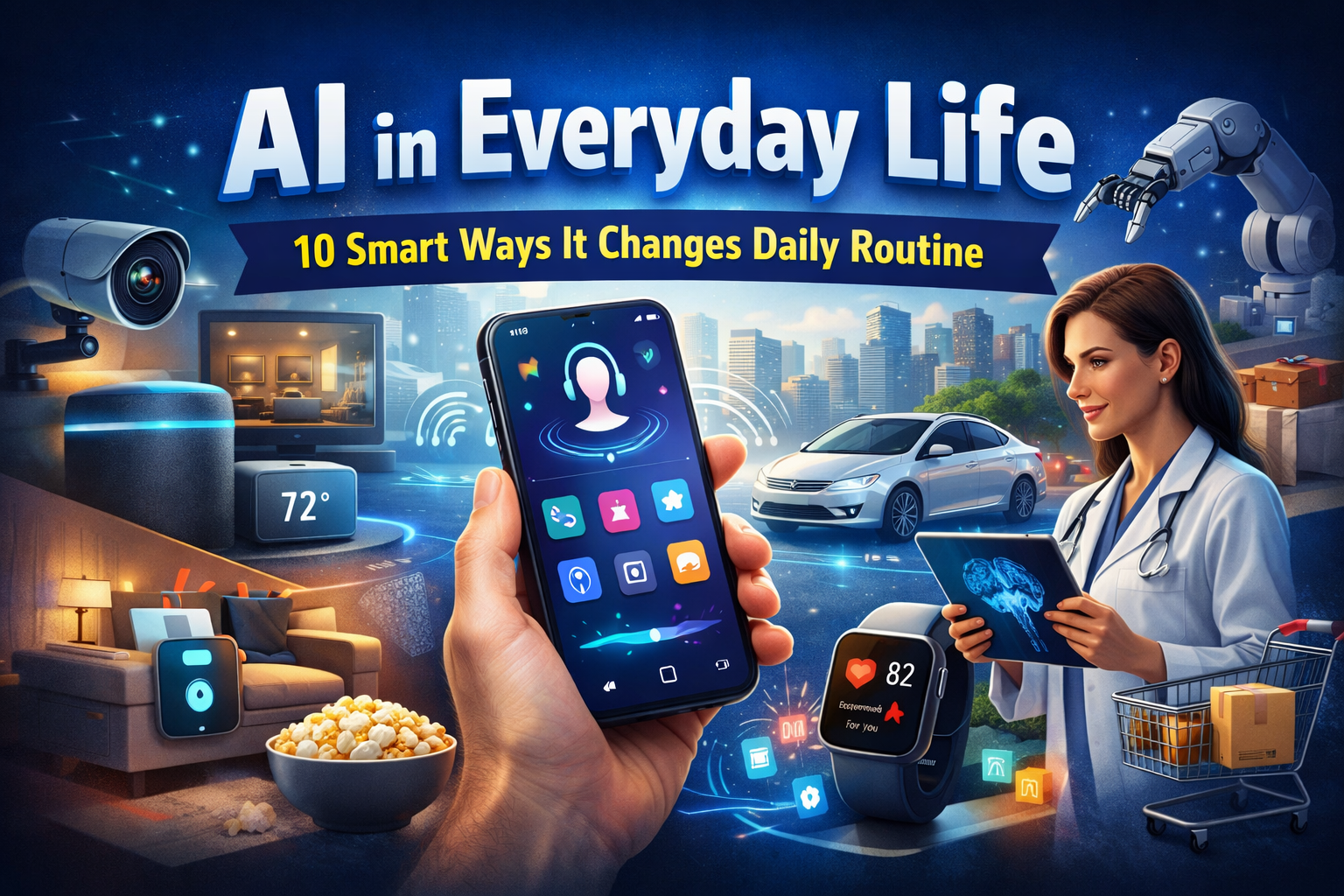
Artificial intelligence is no longer just a futuristic concept. Today, AI in everyday life helps people complete tasks faster, make smarter decisions, and enjoy more personalized digital experiences. From smartphones to smart homes, AI quietly powers many technologies we use daily. If you are interested in how technology is shaping modern living, you can also explore our guide on Future Lifestyle & Digital Trends
Many people interact with AI without even realizing it. When a music app suggests a new song you might like, when a navigation app finds the fastest route, or when a virtual assistant answers a question, artificial intelligence is helping make decisions. These systems analyze large amounts of data and learn from patterns to provide better results.
Understanding AI in everyday life helps us see how technology is shaping modern lifestyles. As artificial intelligence continues to develop, it is becoming more integrated into daily routines, improving convenience, efficiency, and productivity.
1. Smart Assistants and Voice Technology
Voice assistants are one of the most recognizable examples of AI in everyday life. Millions of people use voice-controlled devices to ask questions, set reminders, or control home appliances.
These systems use natural language processing to understand human speech and respond with useful information. Over time, they learn user preferences and improve their responses.
For example, many people now use voice assistants to:
- Set alarms and reminders
- Play music or podcasts
- Check weather updates
- Control smart home devices
- Search for quick information
This technology saves time and allows people to complete tasks hands-free.
2. AI in Smartphones
Modern smartphones rely heavily on artificial intelligence to improve user experience. Many of the features people use every day are powered by AI technology.
Common AI Features in Smartphones
Artificial intelligence helps smartphones perform tasks such as:
- Facial recognition for unlocking devices
- Smart camera adjustments for better photos
- Predictive text and autocorrect
- Voice commands and assistants
- Battery optimization
These features make smartphones more efficient and user-friendly, showing how deeply AI in everyday life has become integrated into modern technology.
3. Personalized Online Shopping
Online shopping platforms use artificial intelligence to improve customer experiences. When you browse an online store and see recommended products, AI algorithms are working behind the scenes.
Artificial intelligence analyzes browsing history, search patterns, and purchase behavior to suggest products that match user interests.
This technology helps businesses provide personalized experiences while helping customers discover items they may need. As a result, AI in everyday life is transforming the way people shop online.
4. AI in Healthcare and Wellness
Healthcare is another field where artificial intelligence is making a significant difference. AI technologies help doctors analyze medical data and detect diseases earlier.
How AI Helps Healthcare
Artificial intelligence can assist healthcare by:
- Analyzing medical images
- Detecting diseases early
- Monitoring patient health through wearable devices
- Supporting online doctor consultations
- Managing hospital data efficiently
Wearable fitness trackers and smartwatches allow users to monitor heart rate, sleep patterns, and daily activity. This makes AI in everyday life an important tool for improving health awareness.
5. Navigation and Transportation
Navigation apps are another common example of AI in everyday life. These apps analyze real-time traffic conditions and suggest the fastest routes.
Artificial intelligence studies data from thousands of vehicles and traffic reports to predict congestion and recommend alternative paths. Ride-sharing services also use AI to match drivers and passengers efficiently.
In the future, self-driving vehicles may become more common, further transforming transportation systems.
6. Entertainment Recommendations
Streaming platforms and music apps rely heavily on artificial intelligence. These services study user preferences to recommend movies, shows, or songs that match individual tastes.
By analyzing viewing habits, search history, and ratings, AI systems can suggest content users are likely to enjoy. This personalized experience keeps users engaged and helps platforms deliver relevant entertainment.
This is one of the most common ways people interact with AI in everyday life.
7. Smart Homes and Home Automation
Smart homes are becoming increasingly popular thanks to artificial intelligence. Connected devices allow homeowners to control lighting, security systems, and temperature through apps or voice commands.
For example, smart thermostats learn daily routines and automatically adjust temperatures to save energy. Smart security cameras can detect unusual activity and send alerts to homeowners.
These technologies make homes safer and more efficient while demonstrating the growing impact of AI in everyday life.
8. AI in Education
Artificial intelligence is also transforming the education sector. AI-powered tools can personalize learning experiences for students by analyzing their strengths and weaknesses.
Online learning platforms use AI to recommend lessons, quizzes, and study materials tailored to each student’s needs. This helps learners understand concepts more effectively.
Teachers can also use AI tools to analyze student performance and identify areas where extra support may be needed.
9. Customer Service Chatbots
Many companies now use AI-powered chatbots to provide customer support. These chatbots can answer common questions, guide users through processes, and provide instant assistance.
Instead of waiting for human support agents, customers can receive quick responses from AI systems. This improves customer satisfaction and helps businesses operate more efficiently.
Chatbots are another clear example of AI in everyday life improving communication between businesses and customers.
10. AI for Productivity and Work
Artificial intelligence is also changing the workplace. Many productivity tools now include AI features that help people manage tasks more effectively.
For example, AI can:
- Schedule meetings automatically
- Organize emails
- Analyze business data
- Generate reports
- Suggest workflow improvements
These tools allow professionals to focus on more creative and strategic tasks while AI handles repetitive work.
The Future of AI in Everyday Life
The influence of artificial intelligence is expected to grow even further in the coming years. New innovations may lead to smarter homes, advanced healthcare systems, improved transportation, and more personalized digital experiences.
However, as AI in everyday life becomes more widespread, it is important to consider ethical issues such as privacy, data security, and responsible use of technology.
By balancing innovation with responsible development, society can ensure that artificial intelligence continues to benefit people around the world.
Conclusion
Artificial intelligence is rapidly transforming how people live and interact with technology. From smartphones and healthcare to transportation and entertainment, AI in everyday life is making daily routines more efficient and convenient.
While AI offers many benefits, it also requires thoughtful use and responsible development. Understanding how artificial intelligence works allows individuals and businesses to adapt to a rapidly changing digital world.
As technology continues to evolve, artificial intelligence will likely become an even more essential part of modern living, shaping the future of work, communication, and everyday experiences.
According to technology experts, artificial intelligence is already integrated into many daily tools such as navigation apps, smart assistants, and recommendation systems that personalize content for users.
To learn more about artificial intelligence applications and future innovations, you can explore insights shared by the World Economic Forum.
Frequently Asked Questions (FAQs)
1. What is AI in everyday life?
AI in everyday life refers to the use of artificial intelligence technologies in common activities such as using smartphones, voice assistants, navigation apps, and online shopping platforms.
2. How does artificial intelligence help in daily routine?
Artificial intelligence helps by automating tasks, analyzing data, and providing personalized recommendations. This makes daily activities faster, more efficient, and more convenient.
3. What are common examples of AI in daily life?
Common examples include voice assistants like Siri or Alexa, smart home devices, recommendation systems on streaming platforms, spam filters in email, and navigation apps such as Google Maps.
4. Is artificial intelligence safe for everyday use?
Most AI systems are designed to improve convenience and efficiency. However, users should remain aware of privacy, data protection, and responsible technology use.
5. What is the future of AI in everyday life?
The future of AI includes smarter homes, better healthcare technology, autonomous vehicles, and more advanced digital assistants that help people manage daily tasks efficiently.